Classic box bed plan
A 2x6 box with 4x4 corner posts: the simplest bed to build and fill. Up to 4 ft wide, so you reach the middle from both sides.
- Size
- 8' x 4'
- Height
- 11, 16.5 or 22 in
- Est. materials
- $125–$854
- Skill level
- Easy
Free 3D preview. Full plan $14.99, one-time.
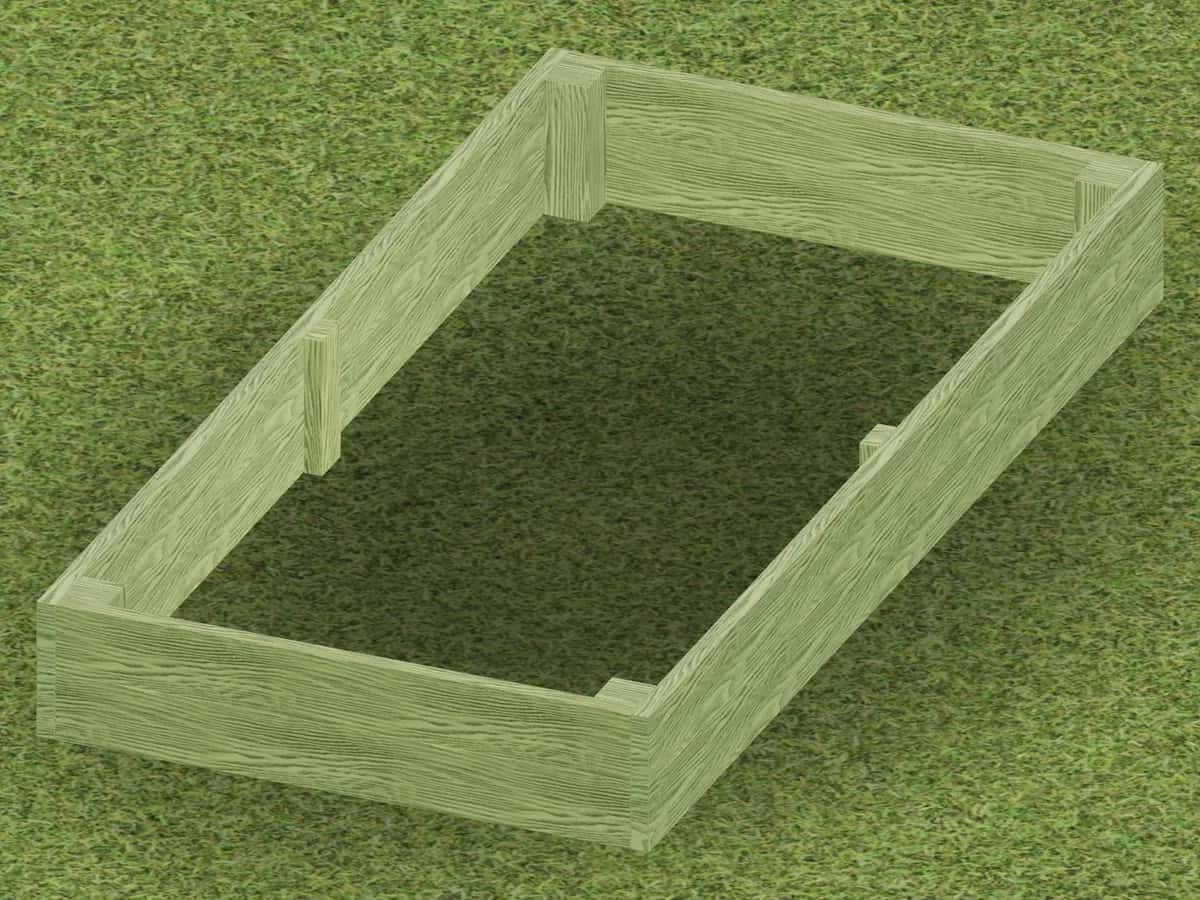
Soil and cost by height
| Height | Size | Soil | Bags (1.5 cu ft) | Economy (est.) | Durable (est.) |
|---|---|---|---|---|---|
| 11 in | 8' x 4' | 23.9 cu ft (0.9 cu yd) | 16 | $202–$332 | $289–$482 |
| 16.5 in | 8' x 4' | 37.1 cu ft (1.4 cu yd) | 25 | $289–$476 | $400–$668 |
| 22 in | 8' x 4' | 50.2 cu ft (1.9 cu yd) | 34 | $376–$620 | $511–$854 |
Worked out by our plan engine; bagged soil included. Costs are estimates from typical US home-center prices.
What the materials cost
Pressure-treated (Economy) and cedar (Durable) side by side, from the plan's own shopping list (8' x 4', soil included).
Economy materials
$202 to $332
Copper-treated ground-contact boards. Same sizes and soil in both.
- Lumber
- $65–$100
- Fasteners and hardware
- $25–$40
- Soil
- $112–$192
Durable materials
$289 to $482
Cedar boards and coated screws. Same sizes and soil in both.
- Lumber
- $132–$215
- Fasteners and hardware
- $45–$75
- Soil
- $112–$192
Estimates from typical US home-center prices; your local prices will vary. Prices last updated: Oct 23, 2026. Not included: sales tax, delivery, tools, gravel/base material, paint or stain.
Plan specifications & limitations
Bed width (reach)
At most 4 ft, so you reach the middle from both sides
In this plan: 4 ft · Source: fieldreport.caes.uga.edu
Soil depth
At least 10 in for most crops; more for root crops
In this plan: 10 in · Source: fieldreport.caes.uga.edu
Suggested depth for your crop
11 in for vegetables
In this plan: 11 in · Source: fieldreport.caes.uga.edu
Wall supports
A support at most every 4 ft along a wall
In this plan: On every long wall · Source: fieldreport.caes.uga.edu
Lumber
New copper-treated (ACQ / CA) ground-contact lumber, or cedar; no railroad ties or lumber treated before 2004
In this plan: Pressure-treated · Source: extension.oregonstate.edu
| Rule | What every plan uses | In this plan | Source |
|---|---|---|---|
| Bed width (reach) | At most 4 ft, so you reach the middle from both sides | 4 ft | fieldreport.caes.uga.edu |
| Soil depth | At least 10 in for most crops; more for root crops | 10 in | fieldreport.caes.uga.edu |
| Suggested depth for your crop | 11 in for vegetables | 11 in | fieldreport.caes.uga.edu |
| Wall supports | A support at most every 4 ft along a wall | On every long wall | fieldreport.caes.uga.edu |
| Lumber | New copper-treated (ACQ / CA) ground-contact lumber, or cedar; no railroad ties or lumber treated before 2004 | Pressure-treated | extension.oregonstate.edu |
Lumber in a food garden
Economy uses new copper-treated ground-contact lumber: an Oregon State study found copper moved only about 1 in into the soil and none into the produce. Durable uses cedar. Never use railroad ties or old treated lumber.
Ground
Assumes level ground with good drainage. On concrete or pavers, water drains out under the walls.
Gophers and moles
Where gophers or moles dig, add the 1/2 in hardware cloth bottom (an option in the wizard).
Soil
Bagged soil is estimated from the inside volume; bulk soil by the cubic yard is often cheaper for several beds. Soil settles: plan to top it up.
Permits and HOA
Many cities and counties require a permit for structures above 120 sq ft. Some require one for smaller ones. HOA rules may limit size, color or materials. Checking permits, setbacks and HOA rules is your responsibility.
Not an engineered plan
The plan is a general guide for a small backyard structure. It is not stamped or engineered, and it is not a substitute for engineering or local approval.
See it in 3D
Questions about this plan
How much soil does the classic box bed need?
How much does it cost to build?
What is the best depth for vegetables?
Start this project
Two bed concepts sized for your space, free in 3D.